


Canada’s Real-Time Rail (RTR) is finally approaching launch, which brings with it a familiar promise, that payments will move faster, at any time of day, with richer data travelling alongside them. For Canadian consumers and businesses that currently depend on banking hours or slower settlement cycles, that means faster access to funds
In this article
Once it settles, it can’t be reversed
However, speed is only part of the change. Once a payment settles under RTR, it can’t be reversed. That puts far more weight on what banks can identify, and act on, before the money moves.
To talk through what this means in practice inside banks, Vyntra brought together senior leaders from payments, fraud and operations across large Canadian banks and financial institutions, at an executive breakfast in Toronto on September 17, 2026. The conversation centred on a simple question: How can banks catch a mistake or stop fraudulent payments, before the money is gone for good?
What RTR already covers
The good news is that RTR’s own infrastructure already helps here. It will include central fraud analytics, a shared risk list, fraud reporting, and Confirmation of Payee, all designed to give banks better information before a payment goes through. But these tools don’t do the whole job. Responsibility still sits with each bank.
Three gaps banks kept coming back to
Risk on the receiving side. One gap the executives kept coming back to: a lot of fraud risk sits on the receiving side, not just the sending side. A mule account can show unusual activity before it ever appears on a shared risk list. The bank holding that account may already have information that the sending bank cannot see.
Errors that look like fraud. Operational errors, including a duplicate payment, a data error or a reconciliation issue, can look identical to fraud at the moment, especially outside business hours. Under RTR, the same transaction may need attention from both fraud and operations teams at the same time, even though those teams often work separately today.
Partial sanctions matches. A clear match, or a clear non-match, can be resolved in seconds. A partial match needs an investigation and RTR doesn’t leave the time for that. Blocking the payment risks holding up a legitimate transaction, while allowing it through risks a compliance failure.
What needs to happen next
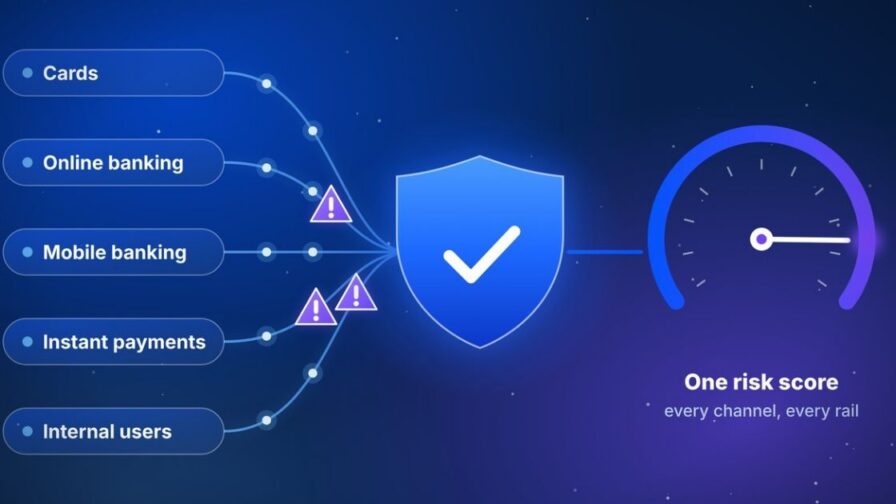
- Banks need one shared, real-time view of each payment, not separate views held by fraud, operations, or compliance teams.
- Signals from the receiving side, like unusual account activity, need to reach decision-makers faster than a central list alone can manage.
- Teams need clear authority to act on what they see, overnight as reliably as during the day, with a clear record of how each decision was made.
Not whether banks have the right tools, but whether banks can turn separate signals into one timely decision.
ROWAN AKIN-SMITH
Director, Business Development North America at Vyntra
Building it now, not after the losses
The answer is not simply to add more checks. Controls that delay legitimate payments create their own problems, particularly for businesses managing payroll, supplier commitments or liquidity. Ultimately, customers will judge their bank on whether a payment arrives when expected, whether a suspicious transaction is stopped when necessary, and whether the bank can explain quickly what has gone wrong when it can’t.
Canada has a chance to get ahead of markets that had to retrofit protections after instant payments took hold. Its central services provide a useful starting point. The next step is to connect them with banks’ own intelligence, address receiving-side risk and strengthen how operational and sanctions exceptions are handled in real time. The opportunity is to build that now, while the infrastructure is still taking shape, rather than wait for losses and disputes to expose the gaps.